
01/12/2025
4th– 7th Sept 2025
Glacier NP Road Trip - Travel diary
Low-Cost Travel Tips, Montana Road Trip Itinerary
- Planning a Montana road trip and wondering where to go, what to see, and where to sleep on a budget?
- This guide is focused on the best places in Glacier National Park, hidden gems, and practical tips for low-cost travel — including where you can sleep in your car.
- Whether you’re chasing alpine hikes, scenic drives, or raw adventure, this Montana itinerary will help you plan an unforgettable trip.
📍 Location: Montana, USA
⏱️ Duration: 4–7 days
💰 Budget: Low-cost possible
🚐 Sleeping: Car camping + campgrounds
🏔️ Highlights: Glacier National Park, alpine hikes, scenic drives
⚠️ Tip: Check Going-to-the-Sun Road reservation system
Before your trip, don't forget:
This article contains affiliate links. If you make a purchase through them, I may earn a small commission at no extra cost to you.
Want to save on your trip with and eSIM? 👇
– Click on the link above “eSIM data” and use a code Miska for 10% off,
– or MICHAE90689 for a discount of $5–$10 depending on your order.
Of course, nothing went according to plan. Even though we had the car fully checked before Alaska—mainly because the guys weren’t convinced the clutch was working properly—we ended up arranging another visit with Jakub and Lenka to have it inspected again. We originally brought the car in for the clutch, but we also asked them to check the alignment and discussed a few issues with braking.
Luckily, both the clutch and the transmission were fine. The real problem was that some previous genius had overfilled the clutch fluid… by almost double. Apparently the liquid was literally overflowing. The guys couldn’t do the alignment because the shocks and stabilizer links needed to be replaced first, which came with an estimated cost of almost 1,500 CAD.
Thanks to Jakub’s well-equipped home workshop, the guys offered to take care of the car themselves and replace the brake discs/rotors as well, since we had changed only the brake pads before Alaska and it seemed they hadn’t settled properly. Despite all the stress, everything finally worked out, and we even managed to book the alignment for the following day after dropping the guys off at the airport. Thank you very much! <3
Another complication appeared when I realized we had forgotten to pick up my driver’s license from the P.O. Box in Banff. I had to replace it because we were updating the address, trying to avoid paying more than double for insurance just because of a Calgary address—something we only discovered after the Indian lady on the phone changed our entire address to Calgary based solely on the mailing address. Thankfully, Péťa picked up the license for us, so we were able to collect it from her later that evening.
By this point we were already behind schedule, because after the airport we were supposed to head straight to Montana. But that would have been a miracle, considering absolutely nothing was going the way it was supposed to.
Day 1 (September 4, 2025)
Arrival in Montana & First Impressions
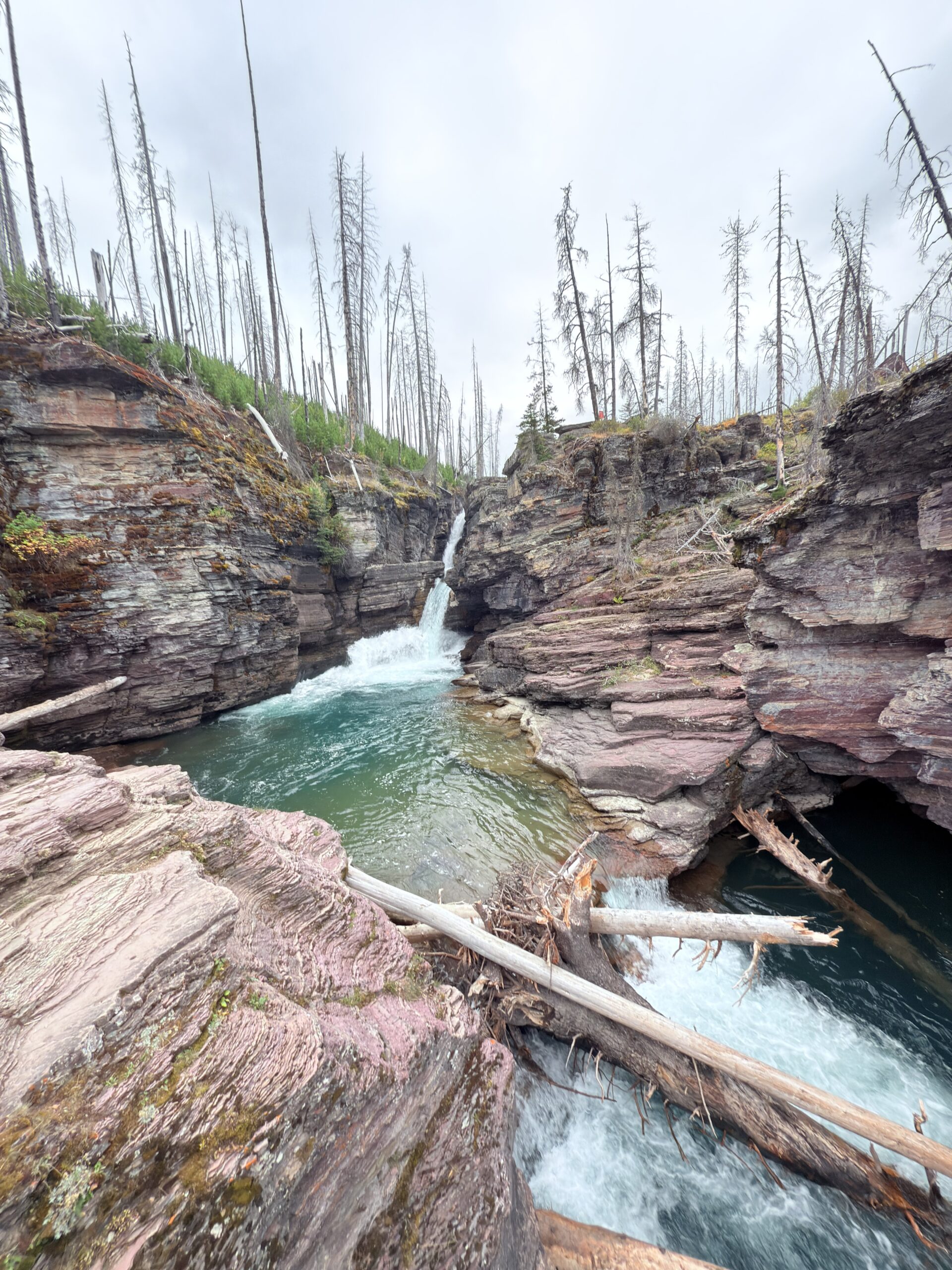
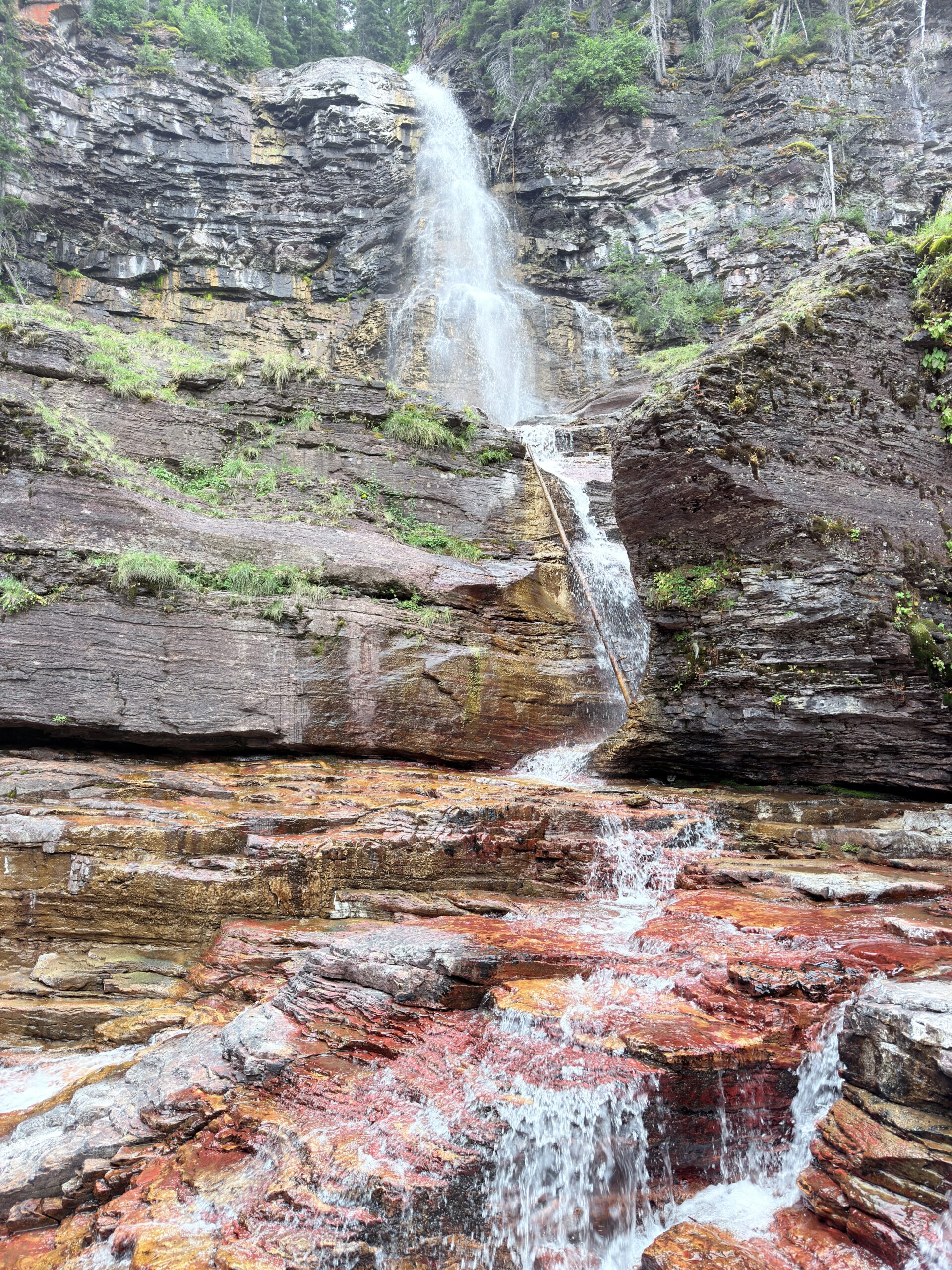
St. Mary & Virginia Falls [5.41 km, 182 m ↑ 182 ↓]
On our first day, we planned to hike Ptarmigan Tunnel and Iceberg Lake. Unfortunately, for 2025 you must reserve the shuttle in advance—and it only runs in the morning. On top of that, accessing Going-to-the-Sun Road between 7 a.m. and 3 p.m. requires a separate reservation. Since we’re arriving in Montana in the afternoon, after a few last stops in Canada (including an unsuccessful attempt to donate hair—apparently you need to book three weeks ahead), none of the big hikes are happening today.
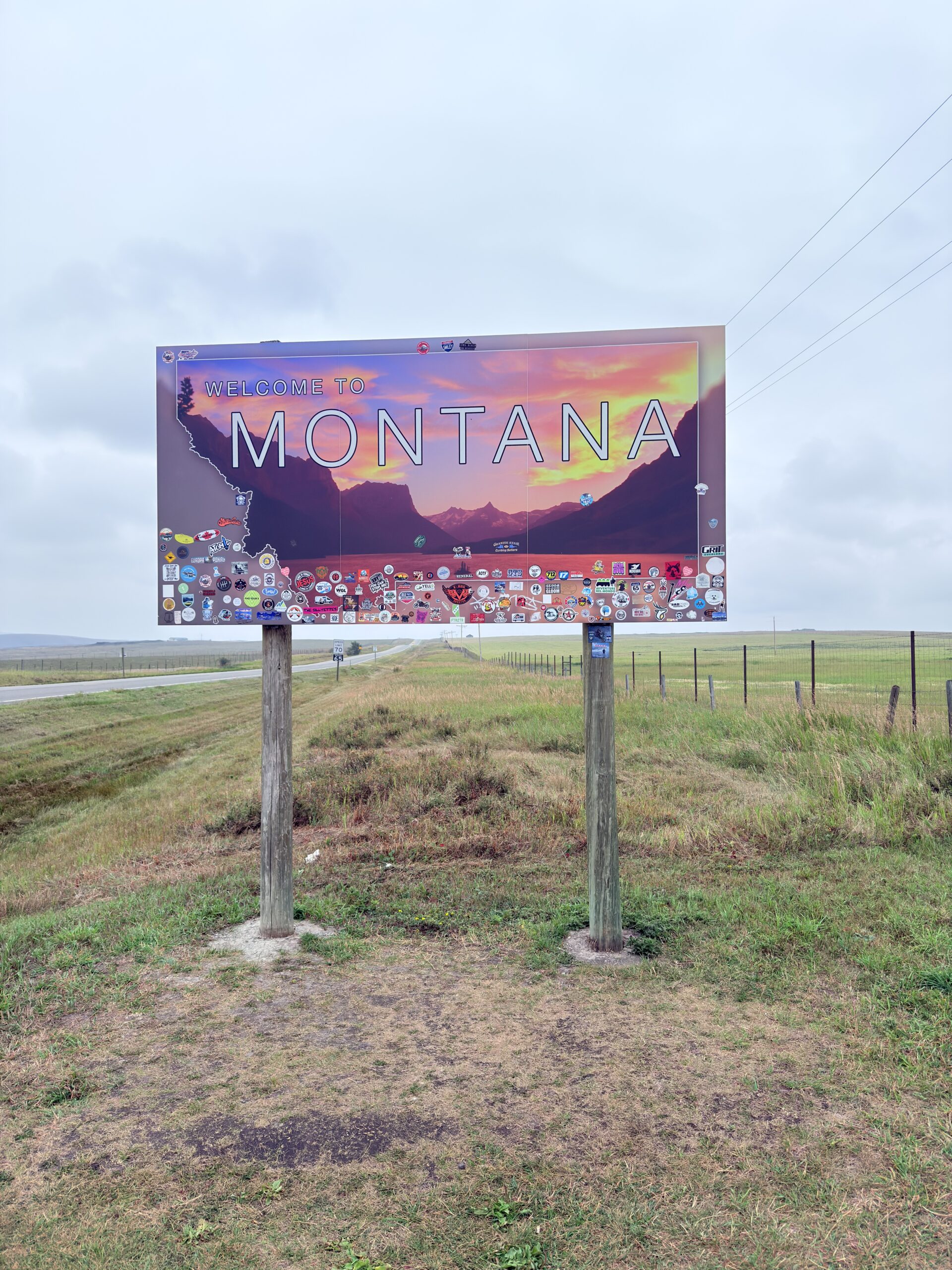
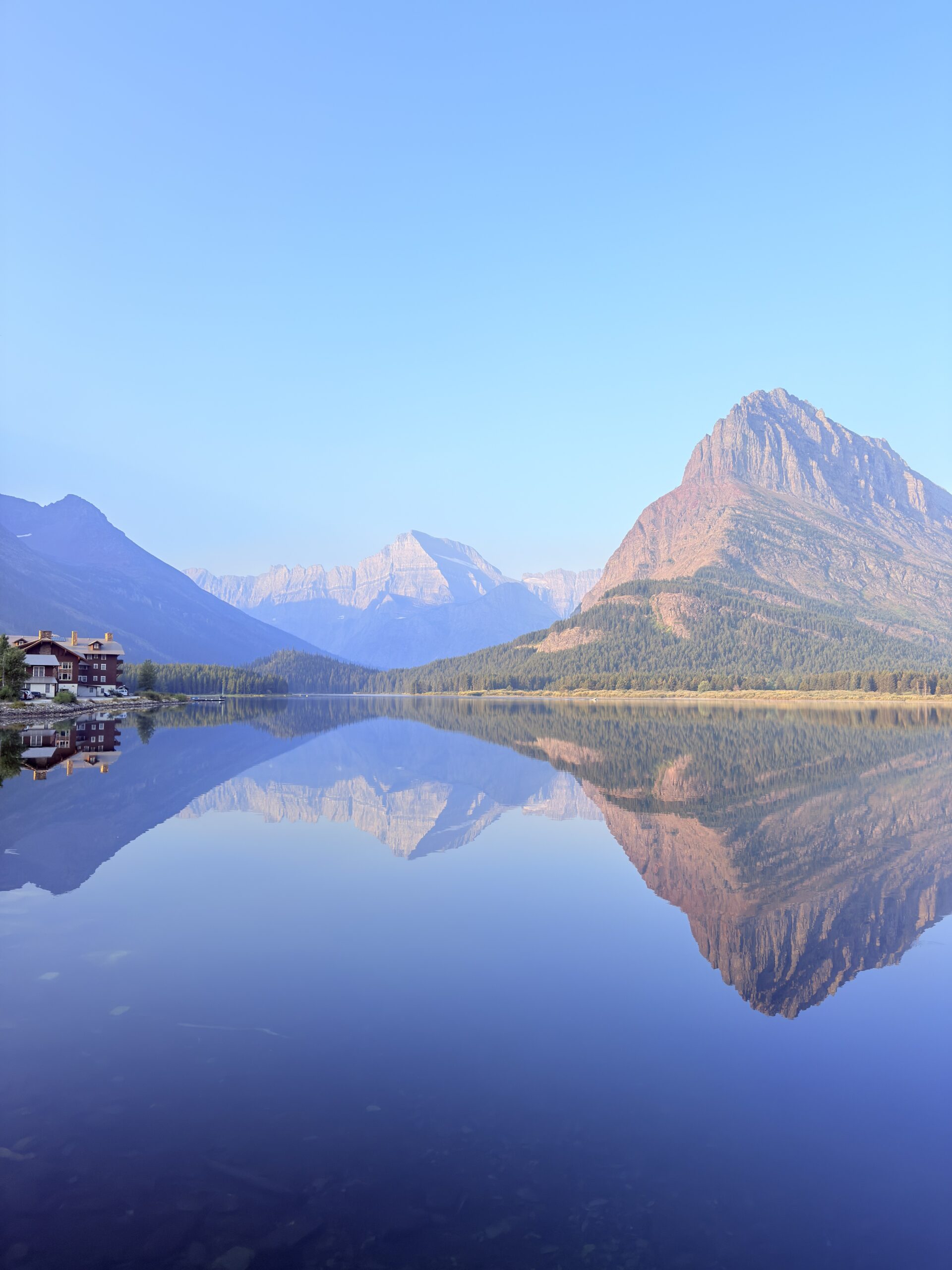
We roll into Montana at 2 p.m., decide to wander through a small shop, and then hop on Going-to-the-Sun Road after 3 p.m. to check out some of the smaller viewpoints. We make a quick stop at the overlook for Goose Island before heading out to St. Mary and Virginia Falls. The parking lot and trail are still packed with tourists. Even on this short 5 km walk we’re hit with déjà vu—this landscape feels almost identical to last year’s road trip in Waterton. The shapes and colors of the mountains, the lakes, even the burnt forests (most likely from the massive 2017 fires) all echo that same atmosphere. We’d heard Waterton and Montana were similar, and since we loved Waterton, we’re definitely glad we didn’t skip Glacier National Park. And Montana has a big bonus: Going-to-the-Sun Road, one of the most scenic drives in North America.
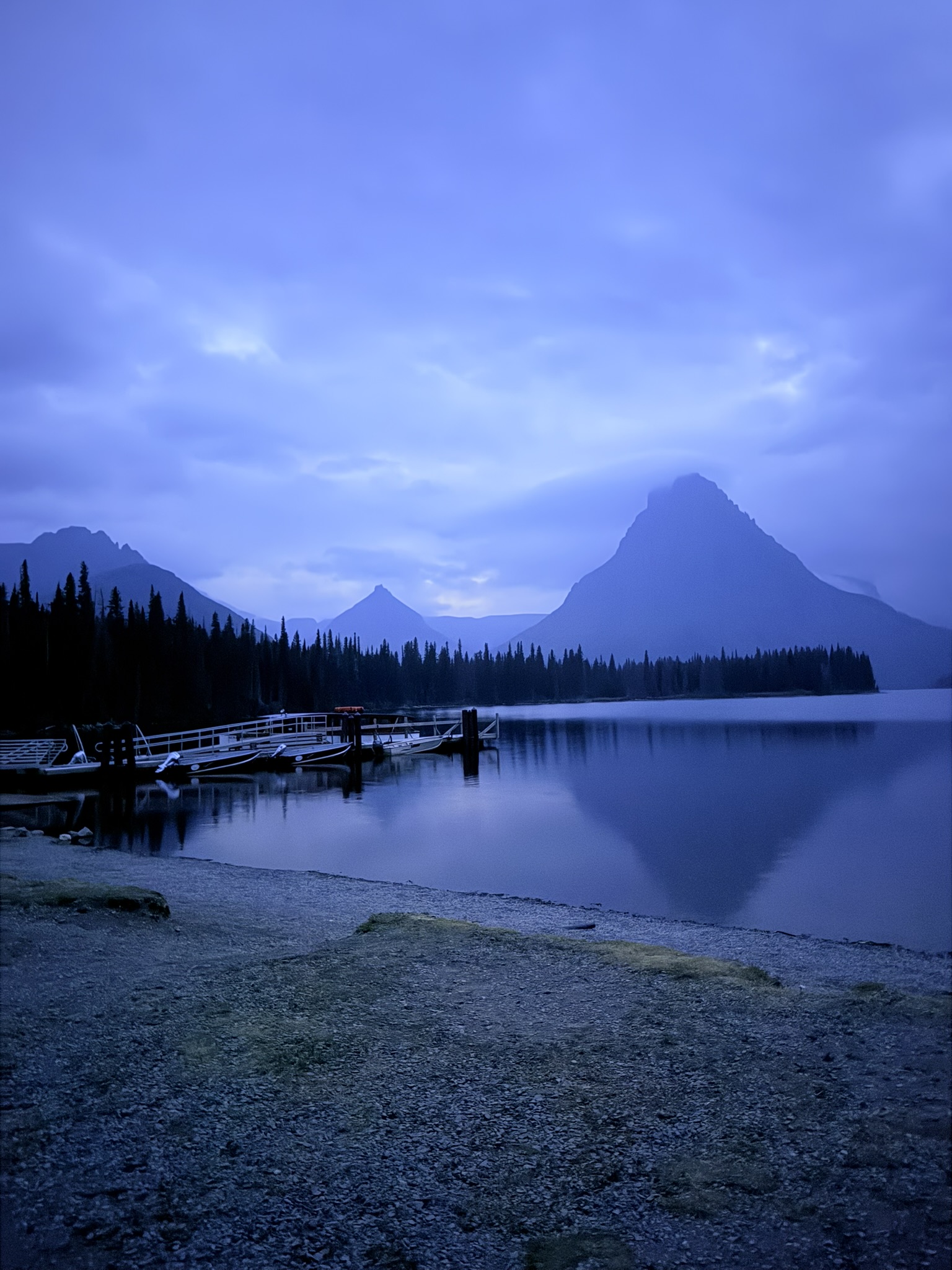
The more dramatic section of the road will have to wait until tomorrow. For now, we need to chase enough signal to try booking the shuttle for the next morning at 7 p.m.—which, of course, doesn’t work out. So we head to Two Medicine Lake for dinner and start planning our next day.
Day 2 (September 5, 2025)
Highline Trail [21.84 km, 731 m ↑ 1,434 m ↓]
Avalanche Lake [8.13 km, 232 m ↑ 232 m ↓]
The best option for today is to hike the Highline Trail, from where we should be able to see the Grinnell Glacier. Based on that view, we’ll decide whether it’s worth trying to book the shuttle twice—once to do the Grinnell Glacier hike from Many Glacier Hotel, and the next day for Ptarmigan Tunnel and Iceberg Lake. We also had Cracker Lake on our list, but that trail is closed this year due to bear activity.
We originally thought that the buses on Going-to-the-Sun Road were still running, but to our unpleasant surprise, we found out they stopped three days ago. So we needed a plan B—hitchhiking. The Logan Pass parking lot, where we planned to start the trail, was already completely full before 7 a.m. We decided to continue to the parking area where we planned to finish our hike and start hitchhiking from there. At least this way we’d walk right back to our car… hopefully.
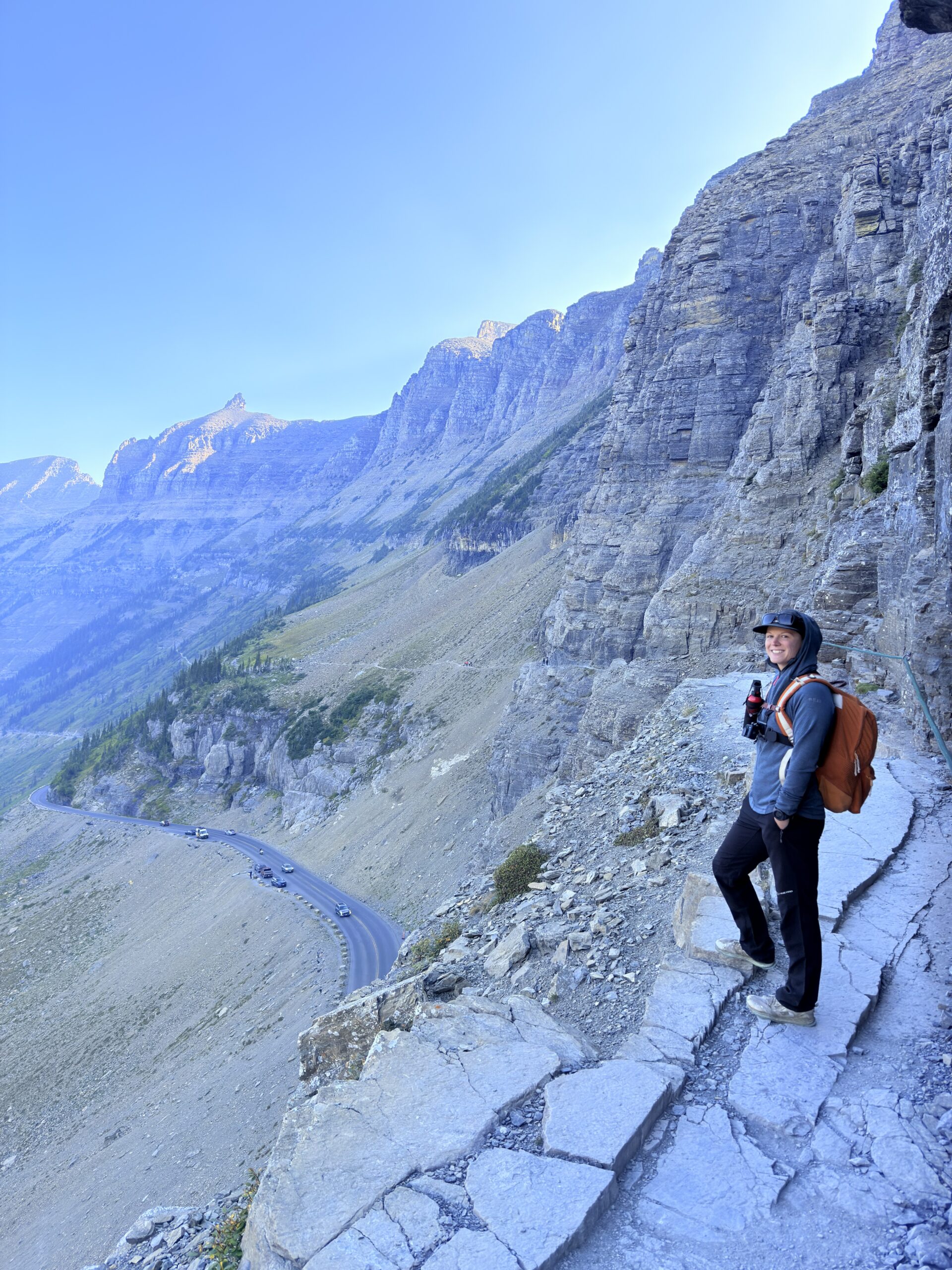
On the way to our hitchhiking spot we saw a cute black bear and within about five minutes, we were lucky—an older gentleman with his granddaughter picked us up. It was their first time in Glacier National Park, and they were already enchanted by the Going-to-the-Sun Road, just like we were. The most beautiful stretch is probably the area around Logan Pass.
We started the Highline Trail at 8:50 a.m., and luckily it looked like the biggest crowds had already passed, although there were still far more hikers than what we’re used to in Banff or Alaska. (Although… in Alaska it really depended on the trail. Some were surprisingly packed too…)
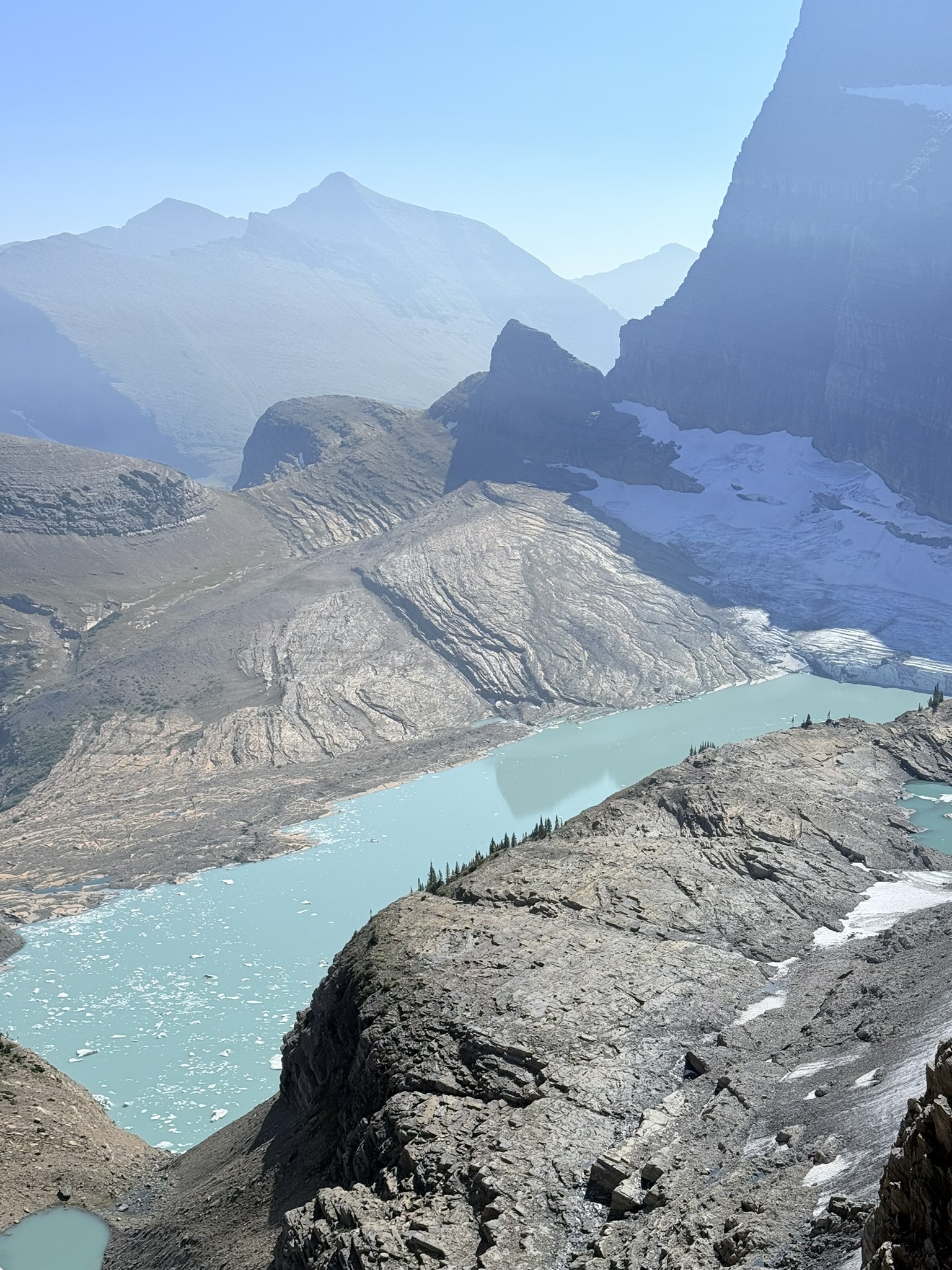
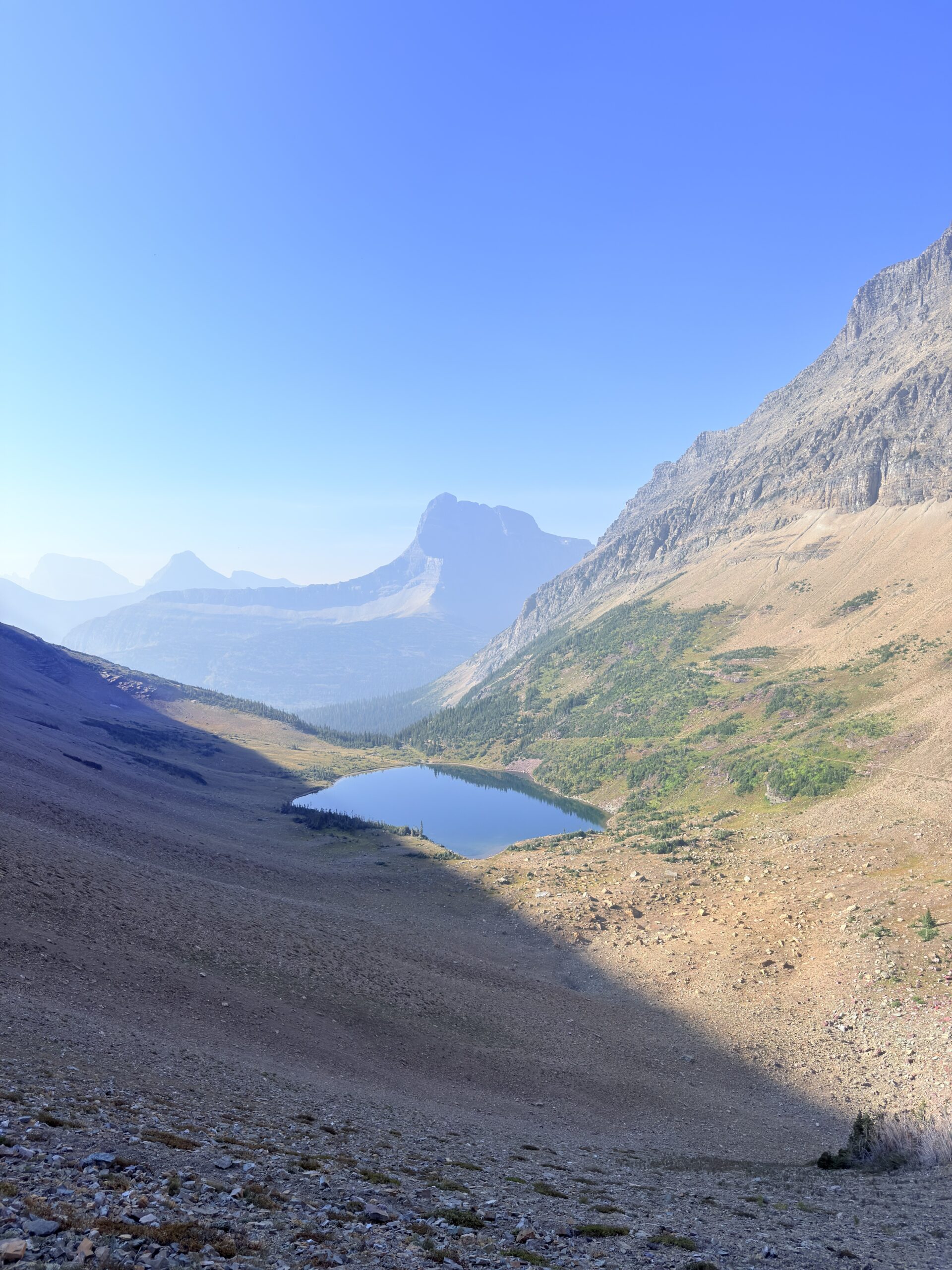
The first half of the trail, all the way to the Garden Wall and the turnoff toward the Grinnell Glacier Overlook, was incredible. I kept stopping every few minutes to take photos and videos, even though the peaks were heavily hazy due to wildfires in Montana, Idaho, and even British Columbia. From the left side of the overlook, we had a stunning view of the Grinnell Lake and the glacier itself. We could even see floating icebergs on the lake—the same reason we tried to reach Kiwa Glacier a few days earlier in Canada, unfortunately without success. It was magical, honestly beyond words.
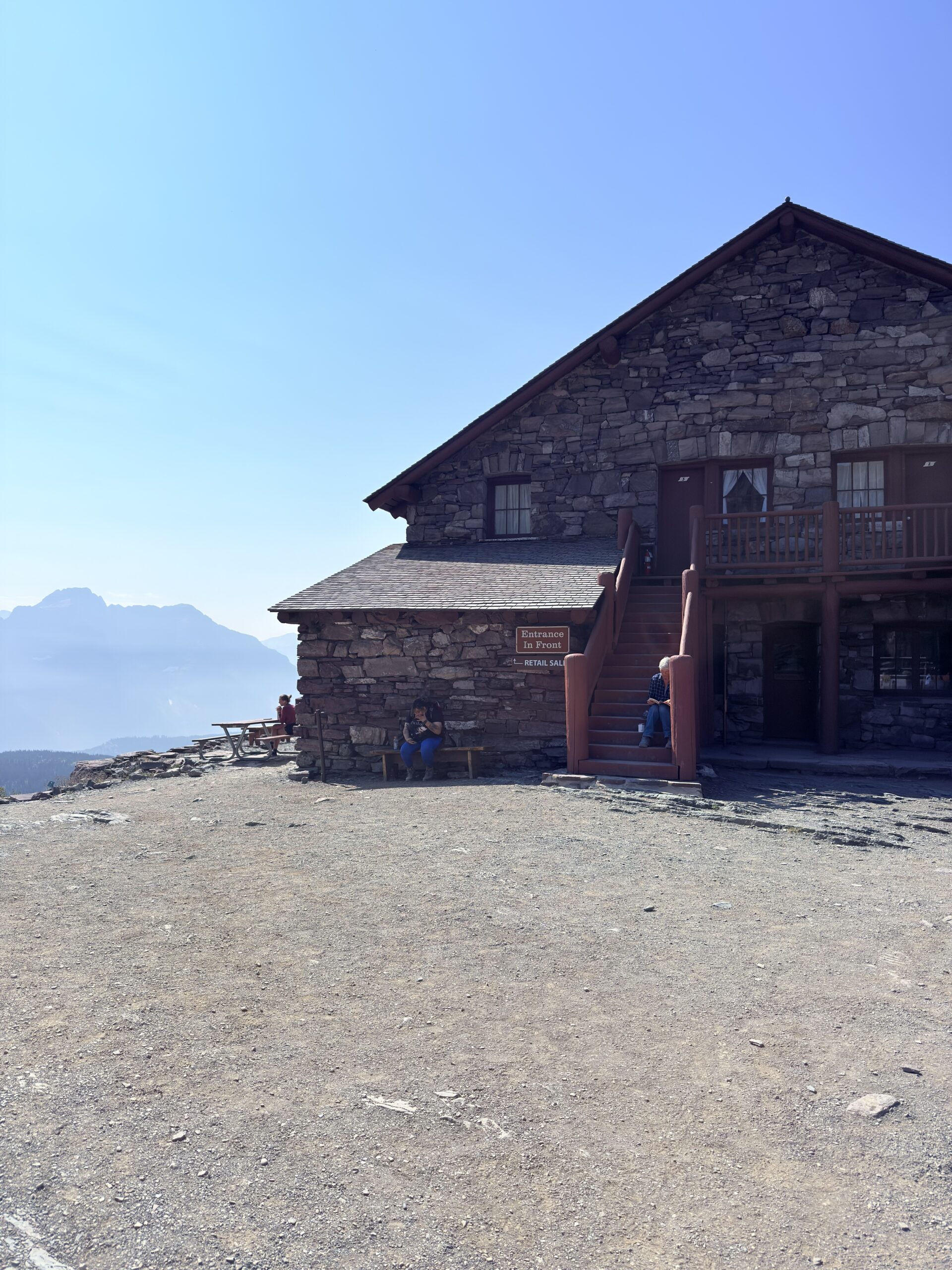
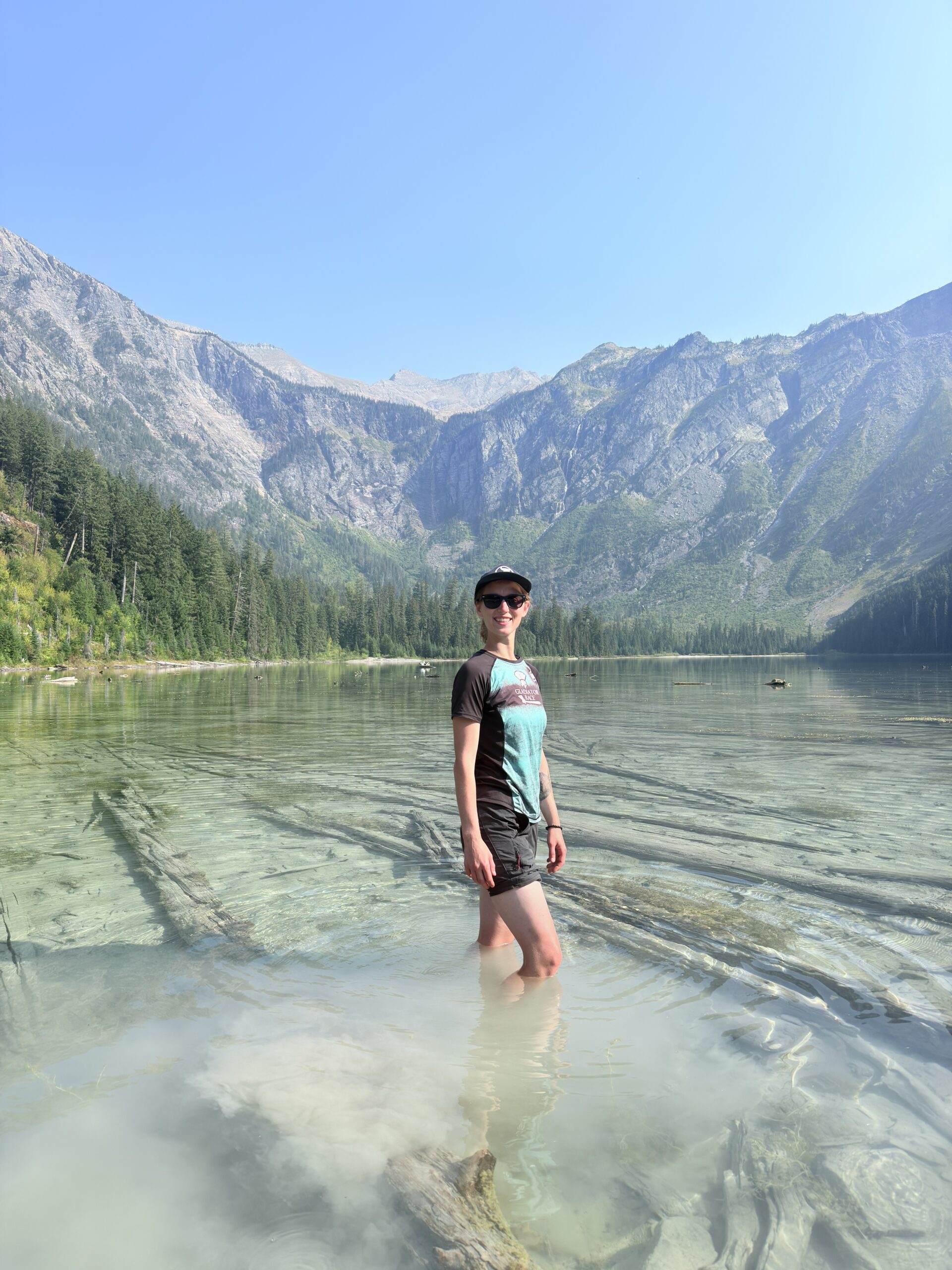
From the overlook, we continued toward the Granite Park Chalet cabins—visible already from the trail. It’s an absolutely beautiful spot to spend the night. After the chalet, the route became a bit monotonous: about 7 km downhill with roughly 700 meters of elevation loss. We reached the car around 3 p.m., and since we still had time, we drove to Avalanche Lake where we basically ran to the lake… not intentionally, but Lu desperately needed to pee quickly and the toilets were only near the lake—with hundreds of hikers along the way, haha.
We cooled our feet in the lake to recover a bit and headed back to the car to try buying shuttle tickets to Many Glacier Hotel at exactly 7 p.m. We drove to the spot where we had slept before, because the internet connection there was actually good—and surprise! We managed to get the tickets.
We went for a shower at a campground, cooked dinner, and headed to bed early. We’d need to drive to Sherburne Lake in the morning—about 30 minutes—and our shuttle was leaving at 7:00 a.m.
Highline Trail – Fun Facts
- The Highline Trail is a legendary section of the Continental Divide Trail, a 4,800+ km route stretching from Mexico to Canada. For a few hours, you’re literally walking a path that long-distance thru-hikers dream about.
- The narrow cliffside section near the start is one of the most photographed spots in Glacier. Rangers installed a hand cable in the 1930s because even then, people were freaking out. Today it’s perfectly safe—but still a place that makes your heart beat a bit faster.
- Mountain goats love this trail. They often use it as their personal highway, and hikers are the ones who must step aside. Some locals even joke that goats here act like they own Glacier.
- Granite Park Chalet has a wild history. It was built in 1913 as part of a luxury lodge system for wealthy travelers arriving by horseback. Today it’s one of the few remaining historic chalets in the entire park—and everything inside is brought in by mule trains.
- The view from Grinnell Glacier Overlook is considered one of the most dramatic glacier viewpoints in the Lower 48. The overlook itself is tiny and perched on a knife-edge ridge—one wrong step and you’re basically staring straight into a valley carved thousands of years ago.
- Glacier National Park once had around 150 glaciers. Today only about 25 remain. Scientists believe that many will disappear within the next few decades, which makes every visit feel like a glimpse into the past.
Day 3 (6 September 2025)
Ptarmigan Tunnel & Iceberg Lake [28.61 km, 966 m ↑ 966 m ↓]
Hidden Lake Overlook [4.77 km, 183 m ↑ 183 m ↓]
We wake up early and head to the shuttle pick-up point, where we cook breakfast, tea, and coffee. Our timing is perfect—we lock the car and jump straight onto the shuttle. At the hotel we check the trails again, wanting to confirm whether Cracker Lake is really closed. In the end, we ask a guy at the hotel if he hikes and what he would recommend from the surrounding trails. He warns us about Grinnell Lake being overcrowded and reassures us that Ptarmigan Tunnel is absolutely worth it. So the plan for today is clear.
Even though we start early, the heat kicks in from the morning, so we decide to tackle Ptarmigan Tunnel first, since that route has the most elevation gain. A big part of the trail follows a broad path, but as soon as we reach Ptarmigan Lake, the views open up and we can see the thin ridge trail snaking toward the tunnel. A solid climb awaits us, but we’re grateful for the decision—doing this ascent at 10 a.m. instead of later probably saves us from being roasted alive.
Wow. I have no words. The tunnel feels like a teleport that carries you from one breathtaking landscape straight into another. On the far side, we overlook Elizabeth Lake, where the scenery might be even more beautiful. We take a snack break at the tunnel—views included. That’s how we like it.
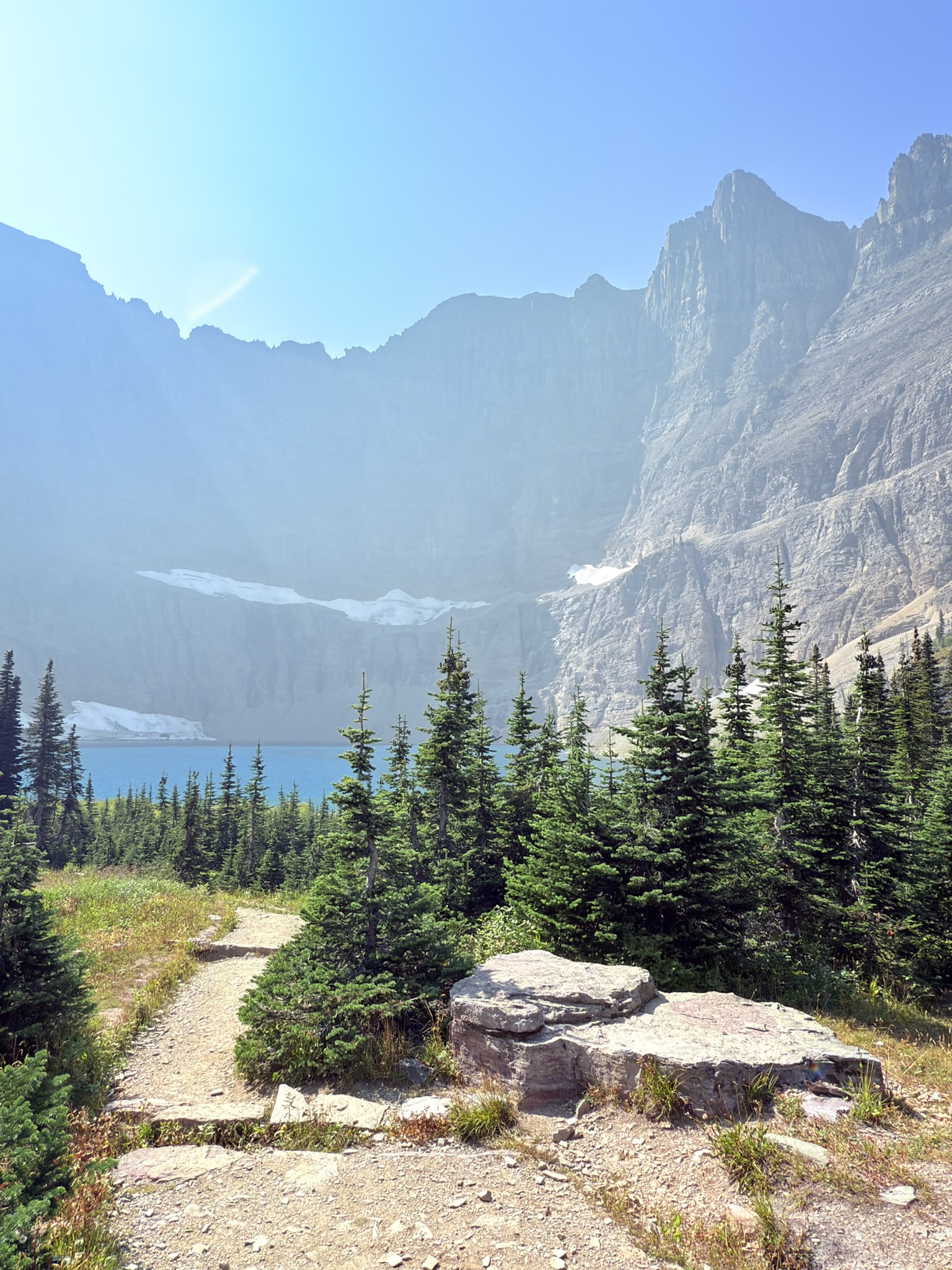
It seems we’re doing well timewise, so we enjoy a bit of a slow-down and even take a refreshing swim in Ptarmigan Lake. The water is perfectly cool—exactly what you want on a hot day like this. We end up staying longer than planned and suddenly realize we need to hurry to Iceberg Lake. Unfortunately, it doesn’t live up to its name today—no floating icebergs at all. It’s clear that most people choose Iceberg Lake over Ptarmigan Tunnel, because the trail and the lakeshore are crowded compared to the peaceful Ptarmigan area, where we mostly met backpackers heading to one of the backcountry campgrounds (Elizabeth or Helen Lake).
We reach the hotel just before 4 p.m., right as the shuttle is pulling away. Luckily, the driver is kind and stops when he sees us rushing, asking if we need the shuttle. He lets us hop in. On the way back we decide to skip Grinnell Glacier and finish the remaining viewpoints along the Going-to-the-Sun Road instead.
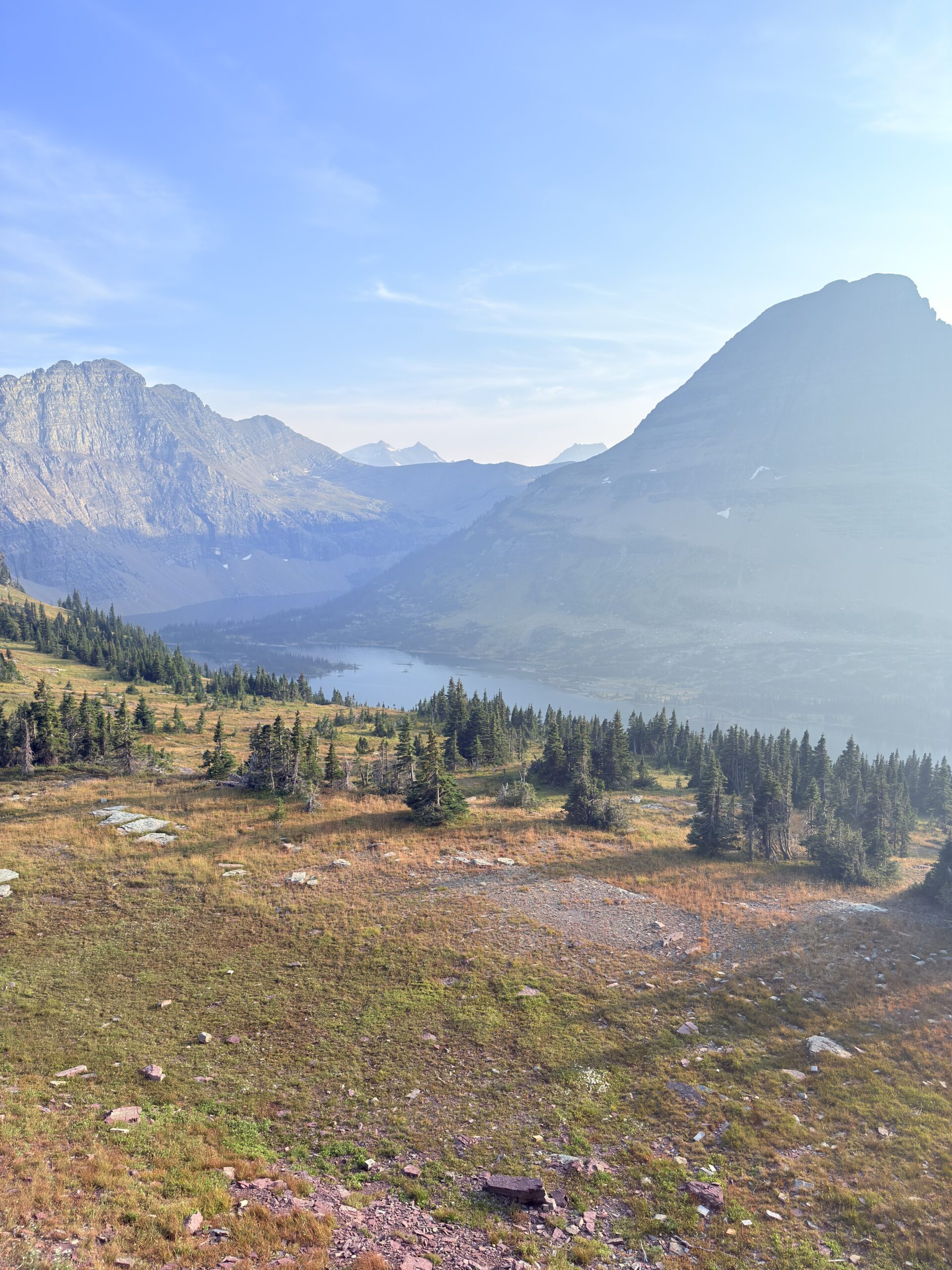
There is still one more walk waiting for us—Hidden Lake Overlook. In total it’s around 5 km with 200 meters of elevation, but it’s the kind of trail where there’s always something to look at. I adore hikes like this. The only downside: the huge crowds of tourists moving along the boardwalk.
We then stop at three viewpoints: Red Rock Point, Sacred Dancing Cascade, and McDonald Falls. After that, we drive to the area below Huckleberry Mountain, which is on the plan for tomorrow.
Day 4 (September 7, 2025)
Huckleberry Mountain [19.35 km, 843 m ↑ 843 m ↓]
We wanted to get a bit more sleep, so we parked on the opposite side to avoid driving through the national park gate early in the morning (entry without a reservation is only allowed before 7 a.m.). We enjoyed a calm breakfast, made coffee and tea, brushed our teeth, and set off.
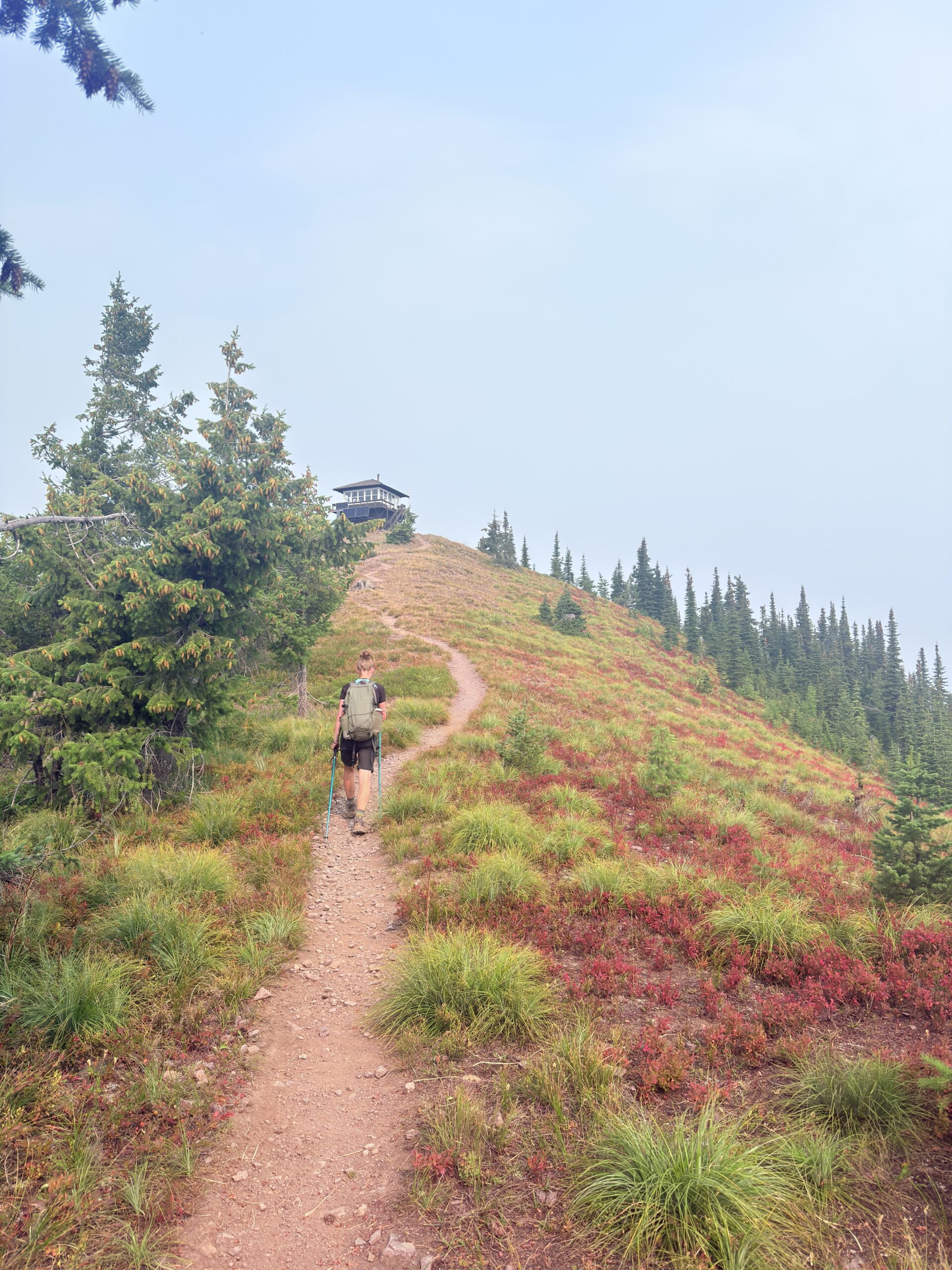
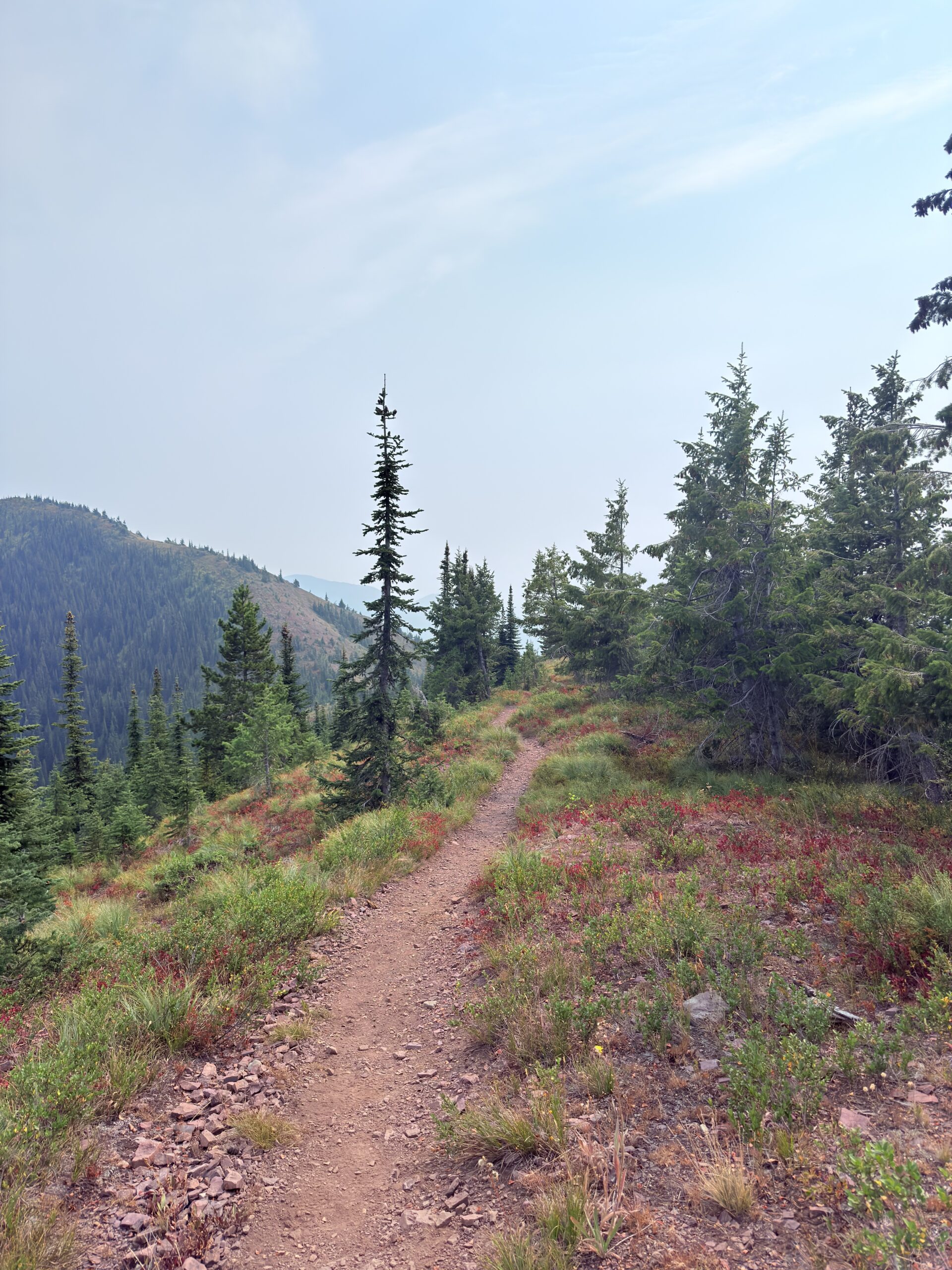
To be honest, the hike up Huckleberry Mountain was pretty dull. For roughly 6 kilometers we walked through the forest, steadily climbing but with no views whatsoever. We weren’t rushing, and once the forest finally started to open up—and we saw the massive amounts of huckleberries everywhere—we simply couldn’t resist.
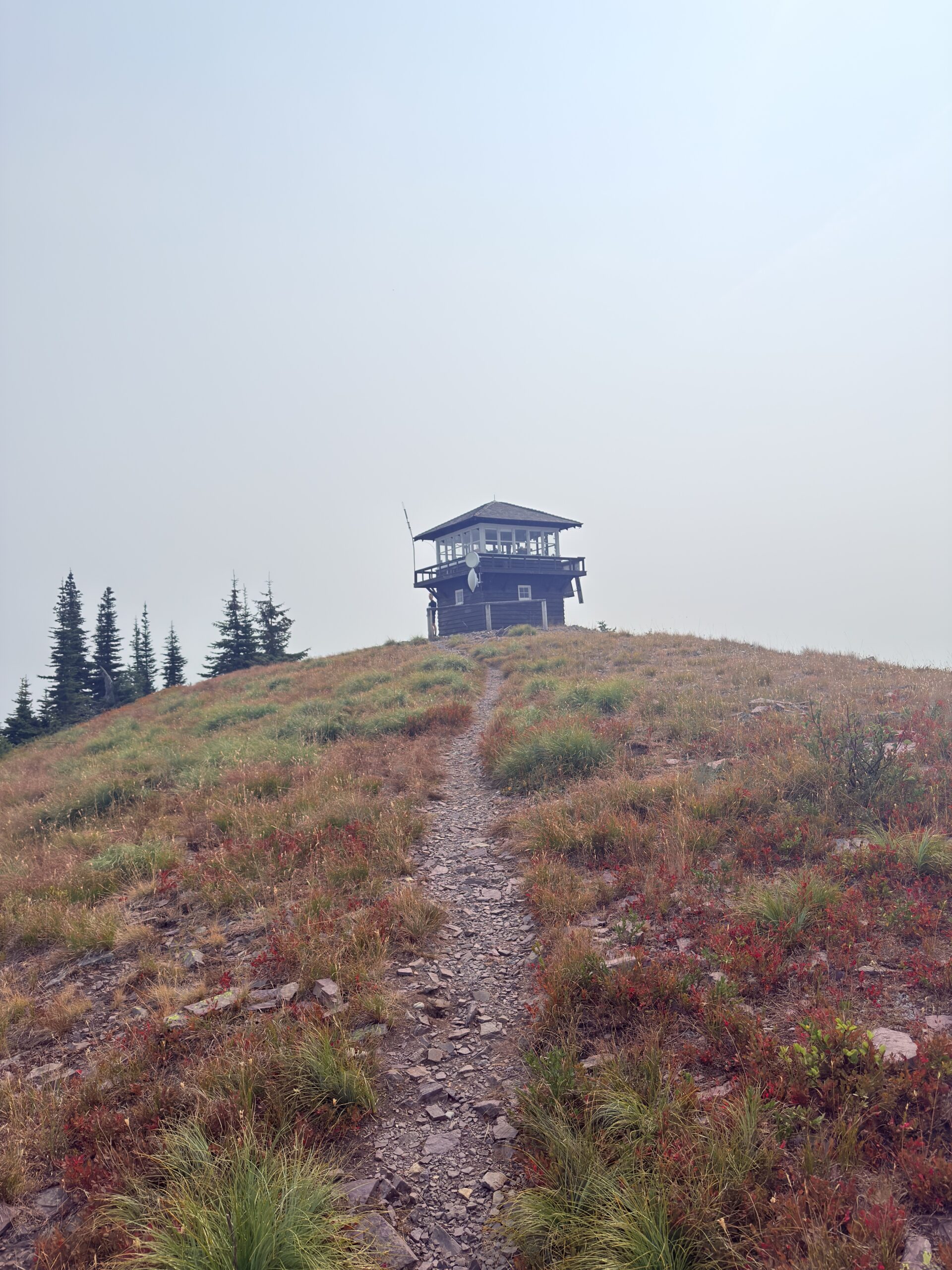
We reached the Fire Lookout around 11:30 a.m., but unfortunately, the views were quite limited. The whole area was hazy due to fires burning across Montana, Idaho, and even British Columbia. At the top, there was just one guy and Elizabeth.
Elizabeth is an incredibly kind woman who lives at the Fire Lookout for about four months. She works 10 days on, then gets 4 days off. Her job is to monitor and detect fires.
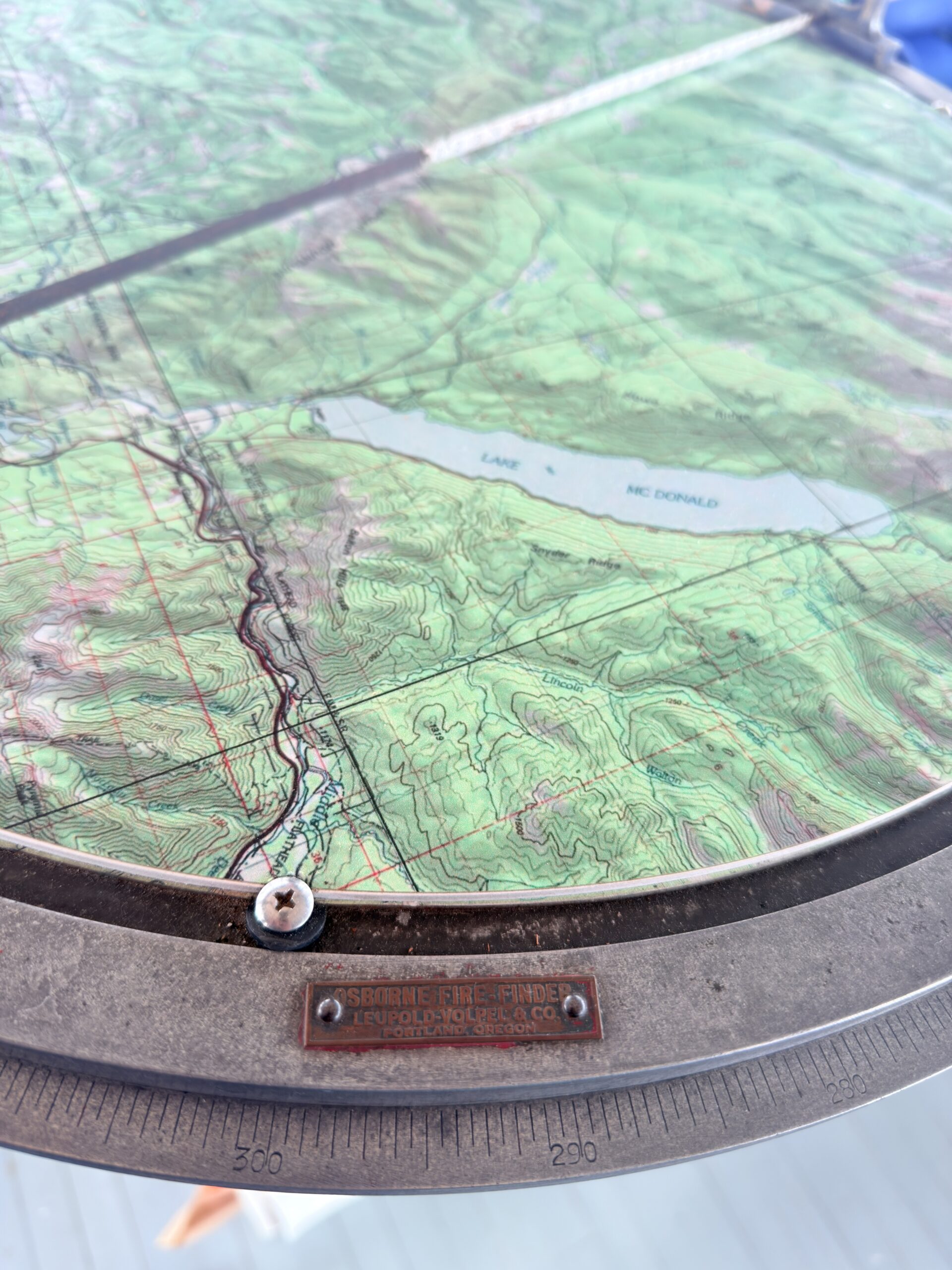
We started chatting with her and ended up talking for nearly three hours about everything imaginable. She was unbelievably sweet and even showed us a bit of her personal space—how she lives up in the tower. She explained how all the observation equipment works (from 1910, and apparently no one has managed to invent anything more accurate for locating fires since!), how the lookouts communicate with the other three towers, how they receive supplies, and more. Because we don’t have anything like this in the Czech Republic, we were genuinely fascinated to learn how the whole system operates.
We didn’t want to keep Elizabeth from her work any longer, and we needed to get going—we had a 5-hour drive ahead of us toward Washington. In Spokane, we planned to restock groceries and take a shower at Planet Fitness.
We had found a spot to sleep less than an hour from Spokane, but I refused to stay there because the ground was covered with little animal bones—absolutely not. So we moved on to another place that supposedly had toilets and potable water. What made us uneasy, however, was the very strange-looking man in the car next to us—most of his windows were replaced with wooden boards, and his doors were locked with chains. We didn’t overthink it; there was at least one other car around, so we moved to the other parking lot and went to sleep—it was already 1 a.m. anyway.
Bye for now—our next adventure begins in Washington 😊
This trip was completely planned from day 1 but everything kept changing and still one of the best trips ever.
Approximate expenses for the whole 4 days and 2 people:
· Gas = $114.3
· Food = $28.97
· Park Pass = $80
TOTAL: $223.27 (30USD/person/day)
💡 Low-cost tip:
Cook your own meals + sleep in car
Travel Q&A
Practical tips from our road trip that can save you time, money, and stress.
🚐 Where can you sleep in your car?
Sleeping in your car is one of the easiest ways to travel low-cost — but knowing where it's legal and safe is key.
Read full guide⚠️ Travel Smarter: Save Money, Stay Safe & Know Bear Country
Want to spend less and avoid common mistakes while traveling? Check out my practical tips on saving money on food and accommodation, plus essential advice for staying safe in places like bear country.
See my pro tips🎟️ How to find the best activities & experiences?
If we wanted to book a tours or unique experiences we use GetYourGuide to discover more — it can make planning much easier on the road.
🗺️ Want even more practical travel tips & itineraries?
I create itineraries based on real experiences from the road, including low-cost travel advice, sleeping spots, and practical planning tips. I've also added hotels for those who prefer more comfort.
Explore travel itineraries